A new project to support women farmers
Oct 28 2022At last, after some delays caused by major forces, the planned activities for the "Support for Women Farmers" project have begun, funded by Allitude and Comet Pelli.
The first project activities consist of a training program for 60 women from Xin Man district who are already active in subsistence family farming with the goal of supporting their food production and consequently improving household nutrition.
GTV decided to create this project considering the context in which many ethnic minority women live in Xin Man. The district is located in one of the poorest regions of Vietnam, Ha Giang, where the population is part of ethnic groups (mainly Nung and H'mong) that do not speak the Vietnamese language and live mainly on subsistence farming. The general illiteracy rate is very high, especially among women, who most often drop out of school, partly due to early marriages.
Assessing all this and the fact that most of the trainings offered in the area are in the Vietnamese language, GTV originated this project for the empowerment of ethnic minority women farmers.
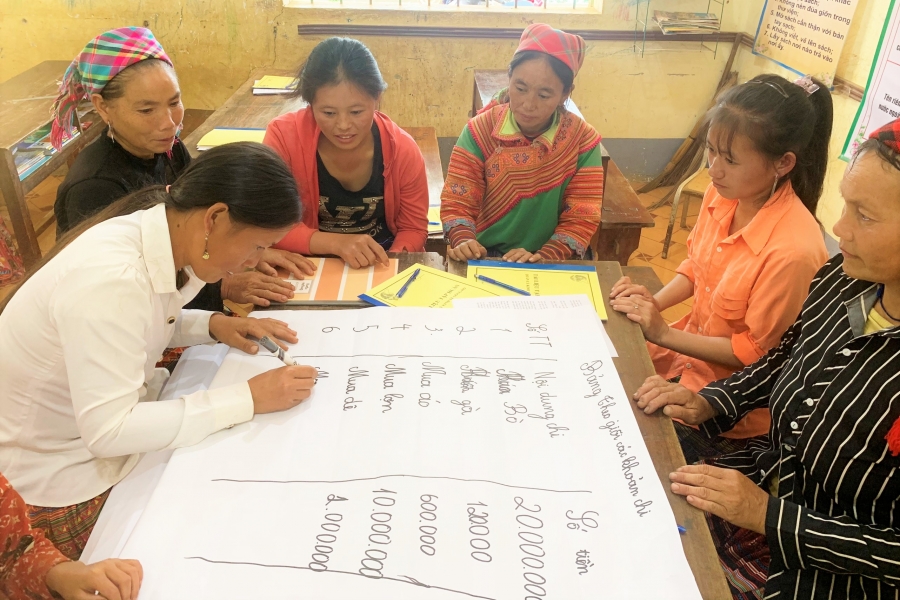
Project actions include four trainings provided in the local language on accounting, nutrition, animal husbandry and agriculture. The women beneficiaries attend the trainings divided into three groups consisting of 20 women each according to their village of residence.
At the start of the project, our Vietnamese coordinator, Que, came up from Hanoi to Xin Man and attended the first activities held on October 15 and 16. The first course, held simultaneously in three villages, focused on accounting and addressed methods of running a family farm and how to make a profit by selling surpluses to earn a salary.
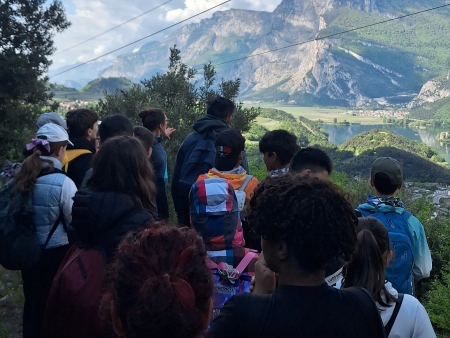
Also present on this occasion were our solidarity travelers during their visit to GTV projects in the region. The group of 12, who left from Milan on October 11 to discover with curiosity and enthusiasm the most authentic Vietnam even in their knowledge of GTV's projects, welcomed the opportunity to attend one of the trainings. It was an unexpected addition to their journey as they moved from village to village to learn about the realities benefiting from the water and education projects (FIABA) that brought them into the classrooms, to sit side by side with these women and interact with them, learning about their stories and aspirations.
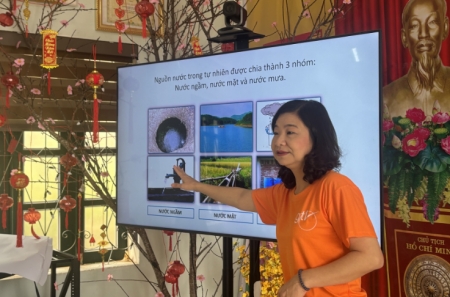
The training activities then continued the following week, October 22 and 23, when courses were held on the topic of nutrition. In this course, trainers talked about the general principles of nutrition, how to prepare a nutritious meal, food groups and their role in a healthy diet. Having basic knowledge about nutrition is essential for several reasons. The mountainous landscape does not allow easy cultivation of many products, which in any case depends on the rainy season, so it is not always possible to have a varied and balanced diet without paying attention to what you eat. It is therefore important for mothers to be aware of the various nutrients, as they are primarily responsible for preparing meals for the entire family. In addition, proper nutrition is crucial for children to grow up healthy and consequently also affects their future education and possibilities.
To better assimilate knowledge, the methodology of the courses was participatory and inclusive, with plenty of space left for practice. This is to make learning more effective and especially because these women need immediately applicable skills to improve their lives, rather than abstract knowledge. The women actively participated and were interested and willing to learn, immediately teaming up and even managing to have fun while learning. Some women even overcame obstacles related to care work by bringing their young children with them, which created sweet and lighthearted moments between training sessions.
The next trainings will be held in November and will focus on topics related to animal husbandry and agricultural improvement.
In the short term the project promises to support women and the feeding of their families, but in the long term the goal is to move beyond mere subsistence production, accumulating marketable vegetables to create a more secure income and more opportunities to improve their own and their children's lives.