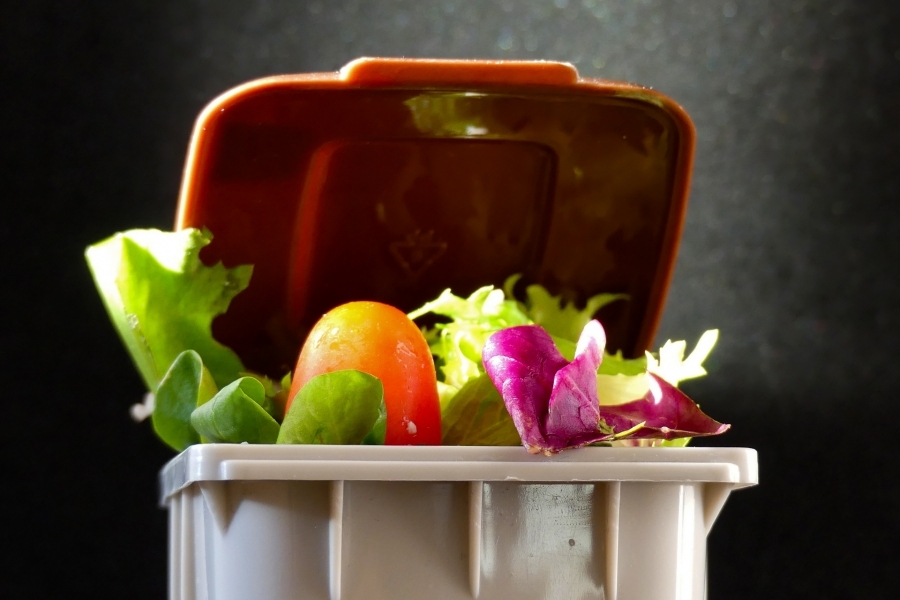
The fight against food waste: around the world and in Trentino
Oct 18 2022We at GTV are committed every day to contribute to the achievement of some of the Sustainable Development Goals of the UN 2030 Agenda, including SDG 2 "Zero hunger".
In addition to this, the 2030 Agenda includes food waste in one of the points of Sustainable Development Goal 12, "Guaranteeing sustainable consumption and production models": the goal that the adhering countries have set themselves is to halve the food waste by 2030.
Since 2021 we have launched the project “Vie di sostenibilità” (Routes of Sustainability) in order to spread the good practices necessary to achieve it: if on the one hand we operate with international cooperation projects, to prevent the malnutrition of Vietnamese children, on the other hand, in Italy the problem is the overabundance of food, which leads to throwing away food that is still good.
In the world:
In 2011, the UN calculated that about one third of the food produced is wasted (UN Environmental Program). After more than a decade, the problem is still present, but international attention on the issue has increased. FAO has created two measurement indices that consider the problem according to two different aspects: the food loss index and the food waste index
With the food loss index, what is considered are agricultural or livestock products that are discarded before they even reach retail, in restaurant kitchens or to the final consumer. The reasons for their elimination are not related to quality, but, for example, to the size or colors not suitable for being marketed. FAO data (2016) report that, in the world, 13.80% of food is lost each year along the production chain. In the macro-area of the United States and Europe, which therefore includes Italy, this figure is 15.70%, therefore even higher.
The food waste index, on the other hand, measures the still good foods thrown away at the time of retail sale (supermarkets, greengrocers, butchers and so on), in restaurants and by the final consumer, therefore in private homes. As regards this type of waste, the data show how 931 tons of food are thrown away every year (UNEP Food Waste Index - Report 2021).
In Italy:
In Italy, the average annual food waste is 67 kg per person, lower than the global average of 74 kg per year. Simplifying, it can be estimated that every year every Italian throws the amount of food equal to about 670 plates of pasta. If we consider our population of just under 60 million people, this is almost 40 million pasta dishes thrown away every year. Shops throw away 4 kg of food per capita every year: an amount classified as "high" by the UN (UNEP Food Waste Index - Report 2021).
Our analysis on food waste led us to look at our territory as well, to understand how citizens, traders and food producers in Trentino behave with respect to the phenomenon of food waste.
So we went to meet the voluntary organization TRENTINOSOLIDALE, active in Trentino since 2010, on the front line against food waste.
In Trentino, the experience of TRENTINOSOLIDALE:
But how, concretely, does TRENTINOSOLIDALE commit itself to this cause? By collecting good food from supermarkets, avoiding waste. President Giorgio Casagranda told us how their experience began: from a group of five volunteers who, in the morning, collected the still good food destined for pulping or in the dustbin and redistributed it in the evening. After more than a decade, the volunteers are 700 and every week they manage to help 1,000 families in financial difficulty. This system is a unique model in Italy, which Casagranda presented throughout the peninsula, from Lecce to Lombardy, to give the opportunity to replicate it elsewhere. "Compared to when the activities of TRENTINOSOLIDALE began, the people of Trentino are more sensitive to the issue, but they have not changed their habits", he then added. What does this mean in practice? That more families and structures, such as supermarkets, join the initiative to fight waste, but, at the same time, the volumes of food saved increase. In order to really have a change, the President's perspective is clear: we need to start from schools, from the youngest age groups, to ensure that awareness campaigns are really effective.
TRENTINOSOLIDALE started by limiting the impact of food waste, but over time it has also developed initiatives to reduce food loss right from the production stage. In fact, the association collaborates with Coldiretti and the farming world favouring the recovery of food right from the fields: nothing is discarded for market reasons alone as the not distributed products are intended for animal consumption.
To return to the global level, Casagranda adds that, in addition to the United Nations 2030 Agenda, also the 2015 EXPO, whose theme was "Feeding the planet, energy for life", contributed to spread awareness on the topic. There is a lot of work to be done, both in terms of food waste and loss, and, as said by the President of TRENTINOSOLIDALE, "we must first change consciences starting with the new generations, in order to realistically hope to reduce waste".
It is true, there is a lot to do, starting with raising awareness among the new generations.
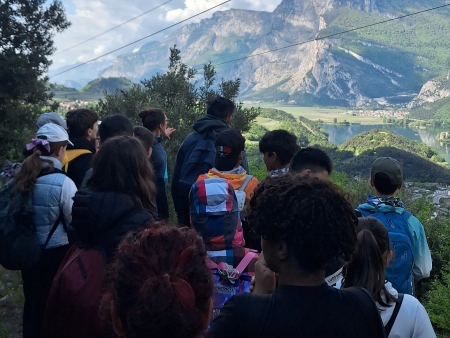
This is why GTV brings its testimony and commitment to many schools in Trentino: talking about Sustainable Development Goals leads students to confront international inequalities, of which food waste is an emblem.
For associations that, like GTV, are confronted daily with contexts in which malnutrition and hunger are concrete and widespread, each student who is more aware of good practices against food waste represents a small step forward!
For further information:
FAO indicators on food waste and related objective of the 2030 Agenda
United Nations Environmental Program Annual Report (2021)
FAO data updated in real time on food waste and loss in the world
(16/02/2022)